HR Software & HRMS
When Should a Growing Business Invest in HRMS Software?
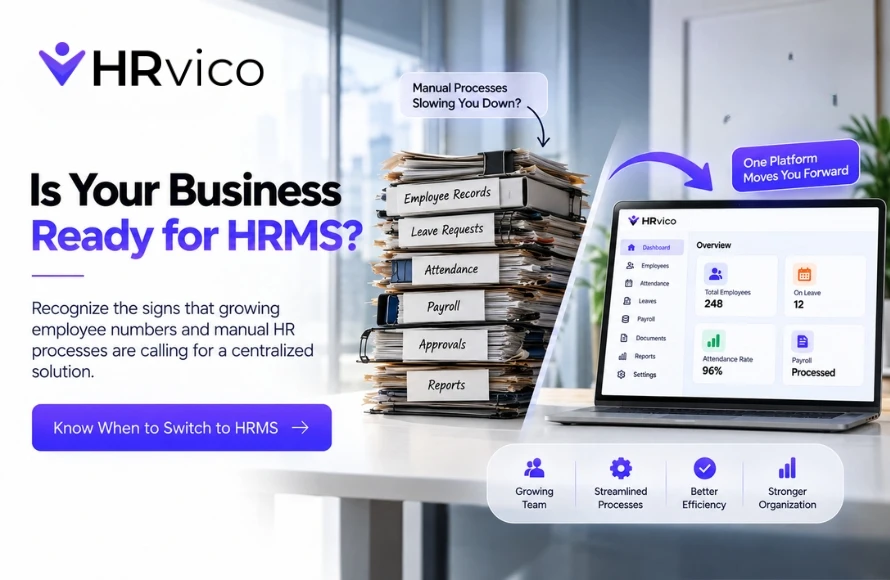
Business growth is exciting. More employees, more clients, new teams and bigger goals all mean the business is moving forward. But there is another side of growth that often gets overlooked: HR work also grows. The Excel sheet that worked perfectly for 15 employees may become difficult to manage with 50. The attendance process that was simple earlier may now involve multiple departments. Employee queries, leave requests, documents and HR reports can start taking up a significant amount of time. So, when should a growing business invest in HRMS software? The answer is not simply “after reaching a certain number of employees.” It is when your HR processes start becoming difficult to manage manually. If your HR team spends a large part of the day updating spreadsheets, checking attendance, maintaining employee records or answering routine questions, it may be time to consider HRMS software. HR professionals should have time for people-focused and strategic work too. An HRMS can help automate or simplify repetitive processes, depending on the software's capabilities. Excel is useful, especially for small teams. But as employee numbers increase, businesses may end up with multiple files for: ✓ Employee records When different files contain different versions of information, keeping everything updated becomes harder. A centralized HRMS can reduce this dependency by bringing supported HR information into one system. Ask your HR team: “If we need the complete information of one employee right now, how many places do we need to check?” If the answer includes Excel, email, Google Drive, WhatsApp and multiple folders, your HR process may already be more complicated than it needs to be. HRMS software can provide a centralized employee record, making information easier to organize and access. With more employees comes more attendance data and more leave requests. Manually tracking who is present, who is on leave and which requests are pending can become time-consuming. An HRMS can provide a structured way to manage attendance and leave, depending on the available features. This can reduce repeated updates and unnecessary follow-ups. If HR repeatedly receives questions such as: “What's my leave balance?” “Where can I check my attendance?” “Can I update my information?” “Has my request been approved?” then your team may be spending valuable time on information that employees could potentially access themselves. Employee self-service features can allow employees to access or update certain information, depending on the HRMS. This can reduce routine dependency on HR. Hiring more employees is a good sign of growth. But every new employee also creates administrative work. HR needs to collect information, maintain documents, complete onboarding activities and organize employee records. An HRMS can help structure these processes and make onboarding more consistent as hiring increases. Growing businesses need better visibility into their workforce. But if preparing a simple HR report means collecting information from multiple Excel files, it can become a time-consuming task. HRMS software can centralize relevant HR information and provide reporting capabilities based on the system. This can make it easier to access information when management needs it. Growth does not always mean more employees in one office. A business may expand across Delhi, Noida, Greater Noida, Ghaziabad or Gurugram, with employees working across different teams or locations. Managing employee information manually across multiple locations can become increasingly difficult. A centralized HRMS can help create more consistent HR processes across the organization. As a business grows, managers often become responsible for approving leave, reviewing attendance or handling employee-related processes. If every approval still has to pass through HR manually, HR can become a bottleneck. HRMS workflows can help managers handle supported approvals directly, based on their assigned access and permissions. This can improve coordination between HR, managers and employees. There is a point where a business stops operating like a small team and starts needing formal processes. You may notice: ✓ More departments This is often the stage when investing in HR technology starts making practical sense. Not necessarily. If your HR processes are still simple, your team is small and your existing system works well, there may be no urgent need to change everything. The important question is: Is your current HR process helping your business grow, or is it slowing your team down? If manual processes are creating delays, duplicate work and confusion, HRMS software may be worth considering. Before selecting an HRMS, evaluate your current situation. Ask: ✓ How much time does HR spend on repetitive administrative tasks? If several answers indicate that your current process is becoming difficult, it may be a good time to explore HRMS options. Do not choose an HRMS simply because it has a long list of features. Look for capabilities that match your actual requirements, such as: ✓ Employee management Also consider pricing, support and how easily employees can adopt the system. The biggest benefit of investing at the right time is not just reducing today's workload. It is creating an HR foundation that can support tomorrow's growth. A system that works for a 30-person company should ideally be able to support the organization as it expands, provided the software's plans and capabilities match that growth. The earlier a business establishes organized HR processes, the easier it can be to manage growth without constantly rebuilding its systems. If your HR processes are becoming difficult to manage manually, this may be the right time to explore HRMS software. Explore HRVico's HRMS features to see how different HR processes can be managed from one platform. Check HRVico's pricing plans to explore options based on your organization's requirements. Contact the HRVico team to discuss your HR needs and find a suitable approach for your business.Is Your Business Growing Faster Than Your HR Processes?
1. HR Is Spending Too Much Time on Repetitive Work
2. Your Excel Sheets Are Becoming Difficult to Manage
✓ Attendance
✓ Leave
✓ Payroll-related information
✓ Documents
✓ HR reports3. Employee Records Are Scattered
4. Attendance and Leave Are Becoming a Daily Headache
5. Employees Keep Asking HR the Same Questions
6. Your Business Is Hiring More Frequently
7. HR Reports Take Too Much Time
8. You Are Adding New Teams or Locations
9. Managers Are Becoming More Involved in HR Processes
10. Your Business Is Growing From “Small” to “Structured”
✓ More managers
✓ More employees
✓ More HR documentation
✓ More employee requests
✓ More reporting requirements
✓ More compliance-related responsibilitiesShould Every Growing Business Buy HRMS Software Immediately?
A Simple Checklist Before Investing
✓ How many spreadsheets are used for HR?
✓ Are employee records centralized?
✓ How are leave requests managed?
✓ How is attendance tracked?
✓ How long does onboarding take?
✓ How difficult is it to prepare HR reports?
✓ Do employees have access to relevant information?
✓ Is the business planning significant workforce growth?What Should You Look for in HRMS Software?
✓ Attendance and leave management
✓ Employee document management
✓ Onboarding support
✓ Employee self-service
✓ Payroll-related functionality
✓ HR reporting
✓ Access controls
✓ Scalability
✓ Ease of useHRMS Software Can Grow With Your Business
Explore HRVico for Your Growing Business