HR Software & HRMS
What HR Processes Can Businesses Automate With HRMS Software?
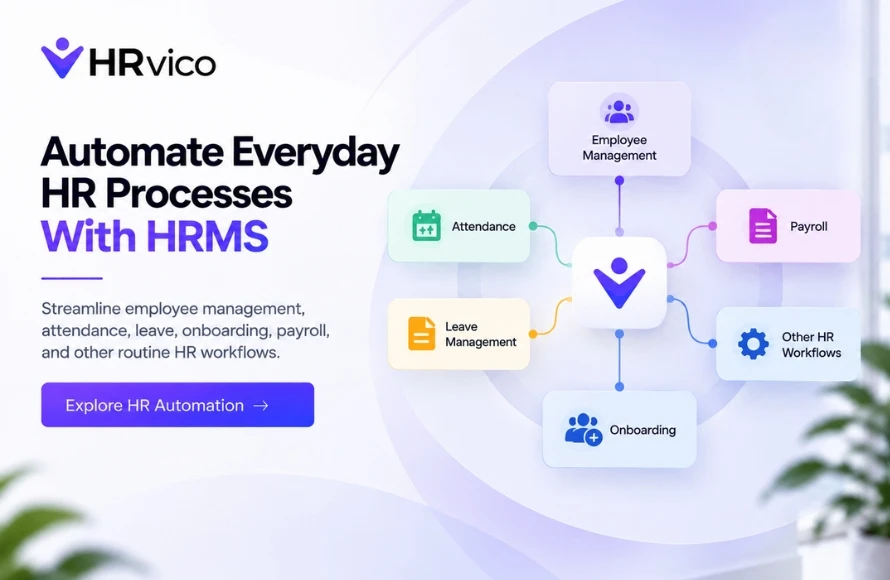
HR teams spend a lot of time handling people-related work, but a surprising amount of that work is repetitive. Updating employee records. Checking attendance. Approving leave. Collecting documents. Preparing reports. Answering the same routine questions. When a business has a small team, these tasks may feel manageable. But as the workforce grows, manual HR work can quickly turn into hours of repetitive administration. This is where HRMS software can make a real difference. HRMS does not replace HR professionals. Instead, it can help automate or simplify repetitive processes so HR can spend more time on people, planning and business priorities. HR automation means using software to handle repetitive or structured HR activities with less manual intervention. The exact level of automation depends on the HRMS and how the business configures it. For example, instead of an employee sending a leave request through WhatsApp and HR updating an Excel sheet manually, the request can be submitted through an HRMS and routed through the defined approval process. That is a simple example, but the same idea can be applied to several HR processes. Employee information is one of the first areas where businesses can reduce manual work. Instead of maintaining employee details across different Excel files, HR can use a centralized employee database. An HRMS can help organize information such as: ✓ Employee profiles When information is centralized, HR does not have to repeatedly search through different files to find basic employee details. Attendance can become difficult to manage when the workforce grows. Manually collecting attendance, updating spreadsheets and checking records takes time and can also lead to inconsistencies. Depending on the HRMS, attendance management can be streamlined through digital records and automated calculations or workflows. This gives HR a more organized way to monitor attendance without relying entirely on manual spreadsheets. Leave management is another everyday task that can easily become repetitive. Employees may send leave requests through emails, messages or verbal communication, while HR has to record everything separately. With an HRMS, employees can submit leave requests through the system, and the request can move through the defined approval process. This can make it easier to track requests and maintain leave records. Searching for employee documents can take more time than expected. A document might be sitting in an email, a shared folder or a physical file when HR suddenly needs it. An HRMS with document management capabilities can help keep employee documents organized alongside employee records. This can reduce paperwork and make document retrieval more convenient. Onboarding involves several small but important tasks. HR may need to collect employee information, documents and other joining details while coordinating with different people. HRMS software can help structure onboarding activities and keep relevant information organized. Depending on the system, businesses may also be able to create standardized workflows for different onboarding requirements. The result is a more consistent onboarding experience instead of managing every new employee through a separate checklist. How many times does HR answer questions like: “Kitni leave balance hai?” “Attendance kaha check karun?” “Apni details kaise update karun?” Employee self-service can reduce some of these routine interactions. Depending on the software, employees may be able to access relevant information, submit requests or update certain details themselves. This does not remove HR from the process. It simply reduces unnecessary administrative dependency. Payroll involves employee information, attendance, leave and other inputs that may need to be coordinated every month. Depending on the HRMS, certain payroll-related processes can be automated or connected with other HR data. This can reduce repeated data entry and make payroll coordination more organized. Businesses should always check exactly which payroll capabilities are included in the software they are considering. Preparing HR reports manually can be frustrating. HR may need to collect information from several spreadsheets before preparing a simple report. An HRMS can centralize HR information and provide reporting capabilities based on the system's features. This can make it easier to access relevant information without repeatedly collecting data from different sources. Employee information changes regularly. Someone may change their phone number, address, department, designation or other details. When updates are handled manually, HR may have to update the same information in several places. A centralized HRMS can provide a structured way to manage employee information and reduce unnecessary duplication. HR teams often have processes that follow the same steps every time. For example: ✓ Employee submits a request HRMS software can help businesses create structured workflows for supported processes. This can make routine work more predictable and reduce the need for HR to manually coordinate every step. Not every HR process needs to be automated immediately. A better approach is to start with tasks that are: ✓ Repetitive For many businesses, attendance, leave, employee records and document management are practical areas to start with. No. The purpose of HR automation is to reduce administrative workload, not remove the human side of HR. HR professionals still play an important role in: ✓ Employee engagement Automation simply gives HR more time to focus on work where human judgment and communication matter. Businesses across Delhi, Noida, Greater Noida, Ghaziabad and Gurugram are growing their teams and managing increasingly structured HR operations. As employee numbers increase, relying completely on Excel, emails and manual follow-ups can become difficult. For growing businesses, HRMS software can provide a centralized way to manage employee information and automate or simplify repetitive HR processes. You do not need to automate everything on day one. Start by identifying the HR tasks that consume the most time every month. Then ask: “Can this process be standardized, centralized or handled digitally?” If the answer is yes, it may be a good candidate for HR automation. The right HRMS should fit your existing processes while also supporting the way your business plans to grow. If your HR team is spending too much time on repetitive administrative work, HRMS software can help create a more organized and efficient workflow. Explore HRVico's HRMS features to see how different HR processes can be managed from one platform. Check HRVico's pricing plans to explore options based on your organization's requirements. Contact the HRVico team to discuss your HR needs and find a suitable approach for your business.HR Is More Than Just Managing People
What Does HR Automation Actually Mean?
1. Employee Data Management
✓ Contact details
✓ Joining information
✓ Department and designation
✓ Employment-related records
✓ Other relevant employee information2. Attendance Management
3. Leave Requests and Approvals
4. Employee Document Management
5. Employee Onboarding
6. Employee Self-Service
7. Payroll-Related Processes
8. HR Reports and Data Collection
9. Employee Information Updates
10. Routine HR Workflows
✓ Manager reviews it
✓ HR records the outcome
✓ Relevant information is updatedWhat Should Businesses Automate First?
✓ Time-consuming
✓ Frequently affected by manual errors
✓ Dependent on multiple spreadsheets
✓ Regularly requested by employees
✓ Easy to standardizeDoes HR Automation Replace HR Teams?
✓ Conflict resolution
✓ Recruitment
✓ Employee development
✓ Performance discussions
✓ Workforce planning
✓ Company culture
✓ Strategic HR decisionsHRMS Automation for Businesses in Delhi NCR
How to Start Automating HR Processes
Explore HRVico for HR Process Automation