HR Software & HRMS
HRMS Software or Separate HR Tools Which Is Better for Businesses?
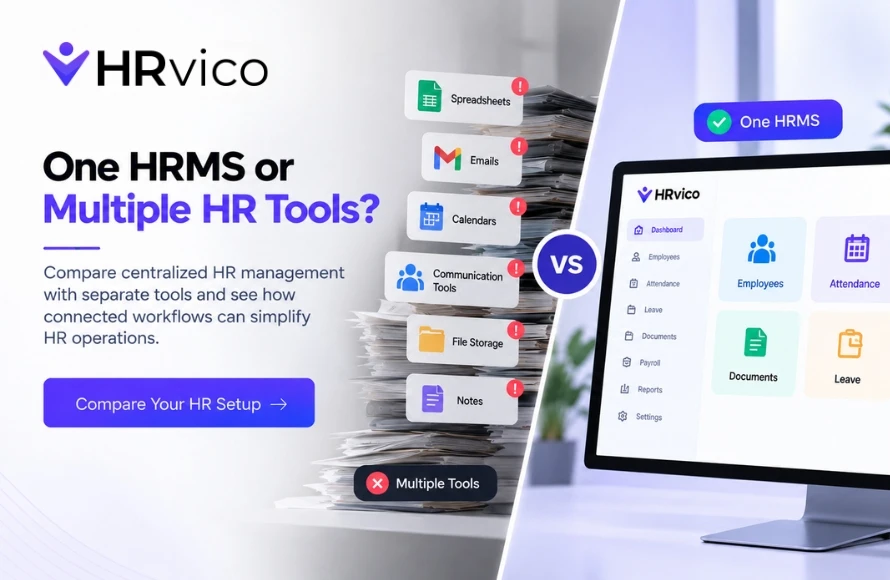
As a business grows, HR work grows with it. What starts with one Excel sheet can eventually become several spreadsheets, attendance software, payroll tools, document folders, communication apps and other HR platforms. At first, using separate tools may seem practical. Each tool solves a specific problem. But over time, HR may find itself asking: “Where is the latest employee data?” “Did we update that information everywhere?” “Which tool should we check for this?” This is where the choice between HRMS software and separate HR tools becomes important. Both approaches can work. The better option depends on the size of the business, HR requirements, existing systems and future growth. HRMS stands for Human Resource Management System. It is a centralized HR platform that can bring multiple HR processes together in one system. Depending on the software, an HRMS may include or support: ✓ Employee management Instead of managing every HR activity through a different tool, businesses can use one platform for multiple processes. Separate HR tools are individual applications designed for specific HR requirements. For example, a business might use: ✓ One tool for attendance There is nothing inherently wrong with this approach. In fact, separate tools can be useful when a business has very specific requirements or already has systems that work well. The challenge begins when these tools do not work well together. The biggest difference is centralization. With separate tools, information may be spread across multiple platforms. With an HRMS, several HR processes can potentially be managed from one centralized system. For HR teams, this can affect how easily they access information, coordinate processes and manage everyday administrative work. With separate tools, employee information may be stored in spreadsheets, payroll software, folders and other systems. This can create duplicate records and increase the possibility of outdated information. A centralized HRMS can keep employee information in one place, depending on the system's capabilities. This can make it easier for HR to find and update employee records. Separate attendance and leave systems can work perfectly well when they are properly connected. But if they are not integrated, HR may need to move information from one system to another. An HRMS can bring attendance and leave management into the same HR environment. Employees may also be able to submit leave requests through the system, while managers or HR handle the approval process. With separate tools, employee documents may be stored in email accounts, cloud folders or physical files. Finding the right document can become frustrating, especially when the workforce grows. An HRMS with document management capabilities can help keep relevant documents connected with employee records. That means less searching and fewer scattered files. Separate tools may require employees to remember different platforms for different HR activities. An HRMS can provide a more centralized employee experience. Depending on the software, employees may be able to access information, submit requests or update certain details from the same platform. This can also reduce routine HR queries. One of the biggest challenges with multiple HR tools is collecting information. HR may need attendance data from one system, employee information from Excel and leave records from another tool before preparing a report. A centralized HRMS can make this process more organized by keeping relevant HR information together. The exact reporting capabilities depend on the software. Imagine an employee changes their contact information. With multiple disconnected systems, HR may need to update the same information in several places. That creates extra work and increases the possibility of mistakes. A centralized HR system can reduce unnecessary duplication by keeping employee information in one place. Managing multiple platforms also means managing multiple logins, interfaces, settings and workflows. For a small HR team, this can become an unnecessary administrative burden. An HRMS can simplify the experience by bringing supported HR processes into one platform. However, businesses should always check whether the HRMS actually supports the processes they need. An HRMS is not automatically the right choice for every business. Separate tools may make sense when: ✓ A business has very specific requirements For example, a company may have a specialized payroll system that it does not want to replace. In such cases, using an HRMS alongside existing tools may be more practical than changing everything at once. An HRMS may become more attractive when: ✓ HR is using multiple spreadsheets The more complex the HR workflow becomes, the more valuable centralization can be. The cost of separate tools is not limited to subscription fees. There can also be a hidden operational cost. HR may spend time: ✓ Moving information between systems This is why businesses should evaluate the total effort involved, not just the price of each software subscription. There is no universal answer. For some businesses, a combination of specialized tools may work perfectly. For others, an HRMS can simplify HR management by bringing important processes together. The right choice depends on: ✓ Business size The goal should not be to use the maximum number of tools. The goal should be to create an HR system that is easy to manage, practical for employees and scalable for the business. Businesses across Delhi, Noida, Greater Noida, Ghaziabad and Gurugram are increasingly managing larger teams and more structured HR operations. As businesses grow, disconnected HR tools can become harder to coordinate. A centralized HRMS can provide a more organized approach to employee management and everyday HR processes, particularly when the business wants to reduce repetitive administrative work. Before choosing between an HRMS and separate HR tools, make a list of your current HR systems. Then ask: How many tools does HR use every week? How often is the same employee information entered more than once? How much time is spent moving data between systems? Do employees know exactly where to go for HR-related requests? If the answers point toward unnecessary complexity, it may be time to consider a more centralized HR approach. If your business is looking to simplify HR management and bring different processes into one platform, HRVico can be explored as an HRMS solution. Explore HRVico's HRMS features to see how different HR processes can be managed from one platform. Check HRVico's pricing plans to explore options based on your organization's requirements. Contact the HRVico team to discuss your HR needs and find a suitable approach for your business.Managing HR With One System or Multiple Tools?
What Is HRMS Software?
✓ Attendance management
✓ Leave management
✓ Employee documents
✓ Onboarding
✓ Payroll-related processes
✓ Employee self-service
✓ HR reportsWhat Are Separate HR Tools?
✓ Another for payroll
✓ Excel for employee records
✓ Google Drive for documents
✓ Email or messaging apps for leave requests
✓ Another application for recruitmentHRMS Software vs Separate HR Tools
1. Employee Data Management
2. Attendance and Leave Management
3. Employee Documents
4. Employee Self-Service
5. Reporting Becomes Easier
6. Less Repetitive Data Entry
7. Easier HR Administration
When Separate HR Tools May Make More Sense
✓ Existing tools already work efficiently
✓ Specialized software is needed for a particular process
✓ Different departments require different systems
✓ Integration between tools is already reliable
✓ The business is comfortable managing multiple platformsWhen Should a Business Consider HRMS Software?
✓ Employee information is spread across different systems
✓ HR spends too much time moving data between tools
✓ Employees have to use several platforms for HR requests
✓ Reports require manual data collection
✓ The workforce is growing quickly
✓ HR wants more centralized processesThe Real Cost of Using Multiple HR Tools
✓ Checking whether records match
✓ Managing multiple logins
✓ Fixing duplicate information
✓ Searching for documents
✓ Preparing reports manually
✓ Training employees on different toolsWhat Should Businesses Choose?
✓ Number of employees
✓ HR team size
✓ Existing software
✓ Required HR processes
✓ Integration requirements
✓ Budget
✓ Future growthHRMS Software for Businesses in Delhi NCR
A Simple Way to Decide
Explore HRVico for Centralized HR Management