HR Software & HRMS
How HR Software Can Improve Coordination Between HR and Employees
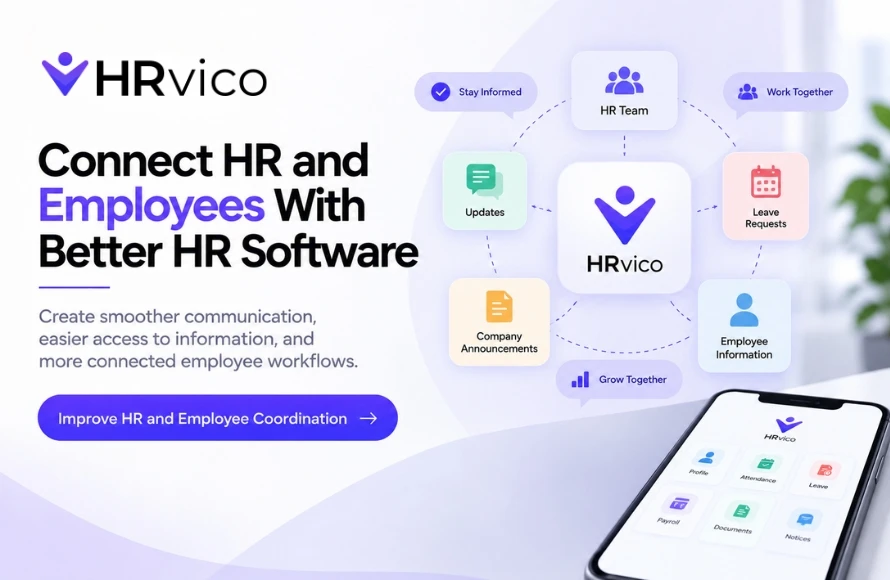
Good HR management is not only about maintaining employee records or processing salaries. It is also about making sure employees know where to find information, how to submit requests and who is responsible for the next step. In a growing business, this coordination can become difficult. An employee sends a message about leave. HR checks an Excel sheet. A manager approves it separately. Someone updates the attendance record later. The process works, but it takes time. This is where HR software can make everyday coordination more structured. Instead of depending on scattered messages, spreadsheets and manual follow-ups, businesses can use HR software to bring supported HR processes into one organized system. Better coordination means employees and HR have a clearer process for common HR activities. Employees should be able to understand: ✓ Where to submit an HR request At the same time, HR should be able to see requests, employee information and relevant updates without searching through multiple platforms. Employees regularly need to request leave, update information, submit documents or ask HR-related questions. When these requests arrive through different channels, HR may have difficulty tracking them. HR software can provide structured workflows for supported requests. Instead of searching through WhatsApp messages or emails, HR can manage requests through a centralized system. This creates a clearer process for both sides. Leave is one of the most common areas where HR and employees need coordination. Without a structured system, employees may send leave requests through messages while HR manually updates records. With HR software, employees may be able to submit leave requests through the system, while managers or HR review and approve them. This can make the process more transparent and reduce unnecessary follow-ups. Employees do not always need to contact HR for basic information. Depending on the software, employee self-service may allow employees to access information related to areas such as attendance, leave or their own profile. This creates a simple shift: Instead of asking HR every time, employees can access information themselves. For HR teams, this can reduce routine queries. Employee information changes over time. Phone numbers, addresses, bank details, emergency contacts, departments and other information may need updates. When this is handled manually, HR may need to collect the information and update multiple records. A centralized HR system can provide a structured way for employees to update certain information, subject to the permissions and capabilities of the software. This can help keep employee records more organized. Sometimes the biggest HR problem is not the absence of information but the lack of clarity. An employee may not know whether a request has been received. HR may be waiting for a manager's approval. A manager may not know that an employee has submitted a request. Digital workflows can help make the status and next step clearer for supported HR processes. This can reduce unnecessary back-and-forth communication. Attendance is another area where HR and employees frequently interact. Employees may have questions about attendance records, working hours or attendance-related updates. With HR software, attendance information can be maintained digitally, depending on the system. This gives HR a centralized way to manage attendance while allowing employees to access relevant information where the software supports it. Employees and HR often exchange documents during joining and throughout employment. If these documents are scattered across email threads, messaging apps and folders, finding them later can be difficult. HR software with document management capabilities can help organize relevant employee documents in a centralized location. This can make document-related coordination easier and reduce repeated requests. Imagine two employees asking for the same type of request. If HR handles them differently each time, confusion can arise. HR software can help businesses establish standardized workflows for supported HR activities. This means employees can follow a similar process instead of depending on individual HR communication. Consistency becomes especially important as the business grows. HR coordination does not only happen between HR and employees. Managers are often involved in leave approvals, attendance discussions, employee information and other HR activities. HR software can provide managers with access to relevant workflows or information based on their assigned permissions. This can reduce the need for HR to manually coordinate every small approval. HR teams often receive the same questions repeatedly: “Leave request approve hua?” “Attendance update hua?” “Where can I check my information?” “Which document do I need to submit?” When relevant information and processes are available through an HR system, some of these routine questions can be reduced. This gives HR more time to focus on employee engagement, recruitment, development and other important responsibilities. HR software does not replace human communication. There will always be situations where employees need to speak directly with HR or their managers. The purpose of HR software is to handle the structured and repetitive side of HR coordination so that human conversations can focus on matters that actually require them. That balance is important. Technology handles routine workflows. People handle people. For businesses across Delhi, Noida, Greater Noida, Ghaziabad and Gurugram, employee numbers can grow quickly as teams expand. With growth comes more leave requests, employee records, attendance queries, documents and manager approvals. A centralized HR system can help businesses create a more consistent process for managing these activities. It can also make it easier for HR to maintain visibility as the organization becomes larger. Your current process may need improvement if: ✓ HR receives most requests through WhatsApp or email These are signs that a more structured HR workflow could be useful. Businesses do not need to change every HR process immediately. Start with the areas that create the most repetitive communication. For example, begin with: ✓ Leave management Once these processes become more organized, other HR activities can gradually be brought into the system. If your HR team wants to reduce repetitive communication and manage employee processes in a more organized way, HR software can be a practical step. Explore HRVico's HRMS features to see how different HR processes can be managed from one platform. Check HRVico's pricing plans to explore options based on your organization's requirements. Contact the HRVico team to discuss your HR needs and find a suitable approach for your business.Why HR and Employee Coordination Matters
What Does Better HR Coordination Look Like?
✓ Where to check relevant information
✓ When a request has been approved
✓ What information HR needs
✓ How to update certain details
✓ Where to find employee-related documents or information1. Make Employee Requests More Organized
2. Simplify Leave Requests and Approvals
3. Give Employees Access to Relevant Information
4. Keep Employee Information Updated
5. Reduce Communication Gaps
6. Make Attendance Coordination Easier
7. Organize Employee Documents
8. Create More Consistent HR Processes
9. Help Managers Stay Involved
10. Reduce Repetitive HR Queries
HR Software Can Make Communication More Structured
How Better HR Coordination Helps Growing Businesses
Signs Your Business Needs Better HR Coordination
✓ Employees frequently ask about request status
✓ Attendance records require frequent manual corrections
✓ Employee information is stored in different files
✓ Managers depend heavily on HR for routine approvals
✓ HR spends significant time answering repetitive questions
✓ Documents are difficult to locate
✓ Different teams follow different HR processesHow to Improve HR and Employee Coordination
✓ Attendance
✓ Employee records
✓ Employee documents
✓ Employee self-service
✓ Routine approvalsExplore HRVico for Better HR Coordination