HR Software & HRMS
How HRMS Software Can Reduce Manual Work for HR Teams
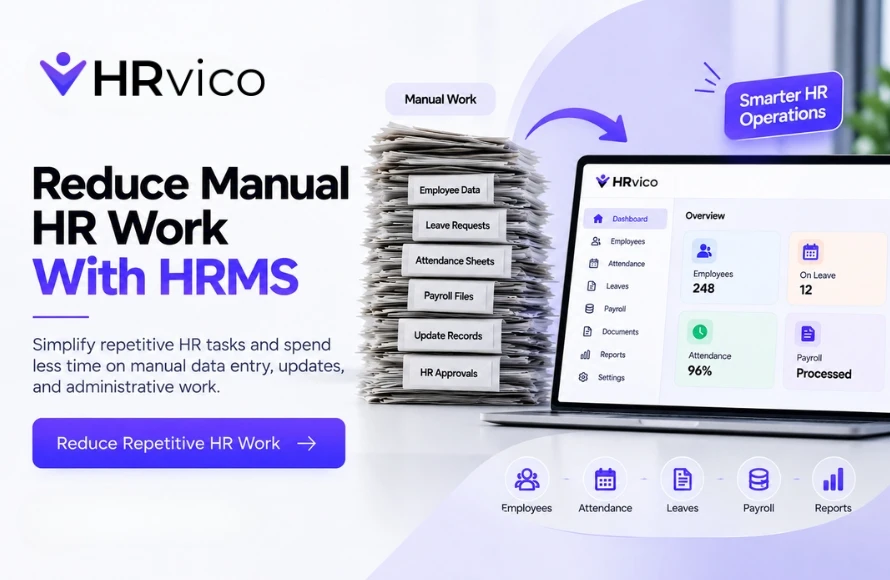
Managing people is an important responsibility, but HR teams often spend hours on tasks that have little to do with employee engagement or business growth. Updating Excel sheets, checking attendance, managing leave requests, collecting employee documents and preparing reports can take up a significant part of the working day. When a business has a small team, these activities may seem manageable. But as the workforce grows, the workload increases, and even simple HR tasks can become time-consuming. This is where HRMS software can help. By bringing HR information into a centralized system and simplifying repetitive processes, businesses can reduce manual effort and make everyday HR work more organized. Manual HR work refers to repetitive activities that require employees to enter, collect, update or verify information without much automation. Common examples include: ✓ Maintaining employee records in Excel These tasks are necessary, but managing them manually can consume time that HR could spend on more valuable responsibilities. Imagine searching through several spreadsheets and folders just to find one employee's joining date or contact information. When employee records are stored in different places, HR may have to repeat the same search every time information is needed. An HRMS can help maintain employee information in a centralized database. Depending on the software, HR can organize employee profiles, department details, joining information and other relevant records in one place. This reduces the need to maintain multiple disconnected files and makes information easier to access. Attendance management can become complicated when employees work across different teams or locations. HR may need to collect attendance information, check records, identify missing entries and update spreadsheets. HRMS software can provide digital attendance records and may support automated calculations or attendance workflows, depending on its features. This can reduce repetitive data entry and help HR manage attendance information more efficiently. Leave requests often arrive through emails, messages or verbal conversations. HR then needs to record each request, track approvals and update leave records. With an HRMS, employees may be able to submit leave requests through the system. Managers can review requests, and HR can maintain records through a defined workflow. This can reduce manual follow-ups and make leave management more organized. Searching for employee documents can take longer than expected when files are scattered across email attachments, cloud folders and physical records. An HRMS with document management capabilities can help organize relevant documents alongside employee records. This makes it easier to locate information when required and reduces dependence on separate folders. It can also help HR maintain a more consistent process for collecting and managing employee documentation. Every new employee creates administrative work, from collecting personal details to maintaining joining documents. When onboarding is managed entirely through manual checklists and emails, important steps may be delayed or overlooked. HRMS software can help structure onboarding activities and keep relevant employee information organized. Depending on the system, businesses may also be able to create standardized workflows for recurring onboarding tasks. This is especially useful for companies that hire employees regularly. HR teams often answer the same questions throughout the week: “Where can I check my attendance?” “How do I submit a leave request?” “Can I update my employee details?” Employee self-service features can help reduce these routine interactions. Depending on the HRMS, employees may be able to access relevant information, submit requests or update permitted details themselves. This gives HR more time to focus on employee concerns that genuinely need personal attention. Preparing reports manually often means collecting information from different spreadsheets and checking whether the figures match. This can become particularly difficult when management needs regular updates about employee records, attendance or leave. An HRMS can bring relevant information together and provide reports based on its available features. Instead of repeatedly compiling data from separate files, HR can access organized information more efficiently. Entering the same employee information into multiple systems increases the chances of mistakes. For example, if an employee's department changes, HR may need to update several spreadsheets or records. A centralized HRMS can reduce unnecessary duplication by maintaining information in one system for supported processes. This can help improve consistency and reduce the effort required to keep employee information updated. HR often depends on managers for leave approvals, employee updates and other routine decisions. When these activities are managed through separate messages and emails, following up on pending requests can become time-consuming. HRMS software may provide digital approval workflows and role-based access, depending on the system. This helps establish a clearer process for handling requests and reduces the need for HR to coordinate every step manually. Reducing manual work is not only about completing administrative tasks faster. It is also about giving HR more time to support employees and the business. With less repetitive work, HR can focus more on: ✓ Employee engagement and satisfaction Technology can handle structured processes, while HR professionals continue to make the human decisions that matter. Businesses do not need to automate every process at once. Start by identifying tasks that happen frequently and consume the most time. For many organizations, useful starting points include: ✓ Employee record management The best starting point is the process that creates the most repetitive work for your HR team. Businesses across Delhi, Noida, Greater Noida, Ghaziabad and Gurugram may experience increasing HR workloads as they add employees, departments and locations. Managing everything through spreadsheets and manual follow-ups can become difficult as operations expand. HRMS software can help businesses centralize employee information and simplify everyday HR processes. The right solution depends on the organization's size, requirements, budget and the features offered by the software. Before investing in HRMS software, consider the following: ✓ Employee management capabilities Choose software based on your actual HR requirements rather than selecting a system simply because it offers a long list of features. If your HR team is spending too much time maintaining spreadsheets, managing repetitive requests and organizing employee information, it may be time to explore a more centralized approach. HRVico offers an HRMS platform that businesses can explore for their HR management needs. Explore HRVico's HRMS features to understand how different HR processes can be managed from one platform. Check HRVico's pricing plans to explore options based on your organization's requirements. Contact the HRVico team to discuss your HR needs and find a suitable approach for your business.Is Your HR Team Spending Too Much Time on Manual Work?
What Is Manual Work in HR?
✓ Tracking attendance and leave manually
✓ Updating employee information across multiple files
✓ Collecting joining documents
✓ Following up on pending approvals
✓ Preparing monthly HR reports
✓ Answering repetitive employee queries1. Centralize Employee Information
2. Reduce Manual Attendance Tracking
3. Simplify Leave Management
4. Organize Employee Documents
5. Make Employee Onboarding Easier
6. Reduce Repetitive Employee Queries
7. Simplify HR Reporting
8. Reduce Duplicate Data Entry
9. Improve Coordination Between HR and Managers
10. Give HR More Time for Strategic Work
✓ Recruitment and workforce planning
✓ Training and development
✓ Performance discussions
✓ Employee retention
✓ Supporting managers
✓ Building a positive workplace cultureWhich HR Tasks Should Businesses Automate First?
✓ Attendance tracking
✓ Leave requests and approvals
✓ Document management
✓ Employee onboarding
✓ Routine employee queries
✓ HR reportingHRMS Software for Growing Businesses in Delhi NCR
How to Choose the Right HRMS Software
✓ Attendance and leave management
✓ Document management
✓ Employee self-service
✓ Onboarding workflows
✓ Reporting options
✓ Access controls and permissions
✓ Ease of use
✓ Pricing and scalabilityExplore HRVico for Smarter HR Management