HR Software & HRMS
What Is HRMS Software and Why Do Growing Businesses Need It?
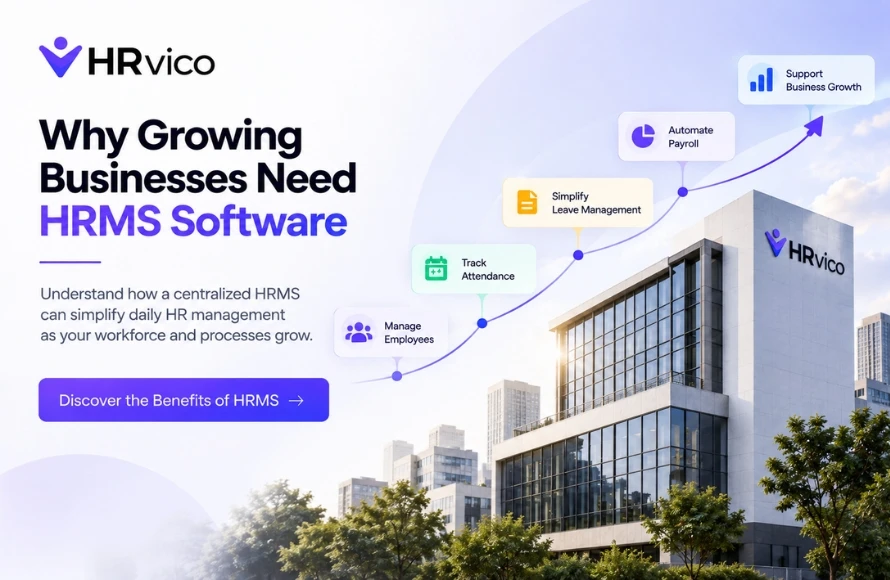
HRMS stands for Human Resource Management System. It is software designed to help businesses manage different HR activities from a centralized platform.
Instead of maintaining employee information across spreadsheets, emails, files and separate tools, HR teams can use an HRMS to organize important HR processes in one place.
Depending on the software, an HRMS may support areas such as:
✓ Employee records and profiles
✓ Attendance management
✓ Leave management
✓ Employee documents
✓ Onboarding processes
✓ Payroll-related information
✓ Employee self-service
✓ HR reports and insights
For a growing business, having this information organized can make everyday HR work much easier.
Why Do Growing Businesses Need HRMS Software?
When a company has a small team, HR may be able to manage employee information manually. But as the workforce grows, the same approach can become difficult to maintain.
More employees usually mean more records, leave requests, attendance data, documents, updates and HR queries.
An HRMS can help businesses create a more structured way of handling these processes.
1. Keep Employee Information Organized
HR teams regularly manage details such as employee profiles, contact information, joining details, documents and other records.
An HRMS can keep this information organized in a centralized system, making it easier for HR to find and update records when required.
2. Reduce Repetitive HR Work
Many HR activities involve repetitive data entry and manual follow-ups.
For example, HR may need to update attendance, maintain leave records, collect documents or prepare recurring reports.
HR software can automate or simplify some of these tasks, depending on the system's capabilities.
3. Make Attendance and Leave Management Easier
Tracking attendance and leave through spreadsheets can become difficult as the number of employees increases.
An HRMS can provide a structured way to record attendance, manage leave requests and maintain related information.
This can reduce the need for HR teams to maintain multiple sheets manually.
4. Improve Employee Access
Employees often need to ask HR about leave balances, attendance information, documents or profile details.
With employee self-service features, employees may be able to access or update certain information themselves, depending on the software setup.
This can reduce routine queries and give HR more time for other responsibilities.
5. Support Better HR Reporting
As a business grows, HR may need reports to understand employee-related information and make internal decisions.
An HRMS can bring relevant HR data together and provide reports based on the features available in the system.
This can be more convenient than collecting information from multiple spreadsheets.
HRMS Software Becomes More Useful as the Business Grows
The need for HR technology is not only about the number of employees. It is also about the complexity of HR operations.
A growing business may have:
✓ Employees working from different locations
✓ Multiple managers and reporting structures
✓ More frequent employee changes
✓ Increasing documentation requirements
✓ More attendance and leave requests
✓ More payroll-related coordination
✓ Greater need for consistent HR processes
Managing all of this manually can take considerable HR time.
An HRMS can help create a more consistent system for managing these processes.
HRMS Software for Businesses in Delhi NCR
Businesses across Delhi, Noida, Greater Noida, Ghaziabad and Gurugram may have employees working across different teams or locations.
For such businesses, centralized HR software can help HR teams maintain employee information and processes in a more organized way.
The right HRMS should be selected according to the organization's size, HR requirements, existing processes and budget.
When Should a Business Consider HRMS Software?
There is no single employee count at which every business must adopt HRMS software.
However, it may be worth considering when:
✓ HR is spending too much time on repetitive administrative work
✓ Employee records are spread across multiple Excel files
✓ Attendance and leave tracking is becoming difficult
✓ Employees frequently need routine information from HR
✓ HR reports take too much manual effort
✓ The business is adding employees or locations
✓ Existing HR processes are becoming difficult to manage consistently
What Should Businesses Look for in HRMS Software?
Before choosing an HRMS, businesses should understand their actual requirements rather than selecting software only because it has many features.
Consider:
✓ Employee management capabilities
✓ Attendance and leave management
✓ Payroll-related functionality
✓ Document management
✓ Employee self-service
✓ Reporting and analytics
✓ Access and permission controls
✓ Ease of use
✓ Scalability for future growth
✓ Pricing and overall suitability
The goal should be to choose a system that fits the business's current needs while allowing HR processes to evolve as the organization grows.
How HRVico Can Support Growing Businesses
For businesses looking to organize their HR processes, HRVico provides an HRMS platform designed to bring different HR activities together.
Explore HRVico's HRMS features to see how different HR processes can be managed from one platform.
Check HRVico's pricing plans to explore options based on your organization's requirements.
Contact the HRVico team to discuss your HR needs and find a suitable approach for your business.