HR Software & HRMS
How HRMS Software Can Help Businesses Manage HR From One Platform
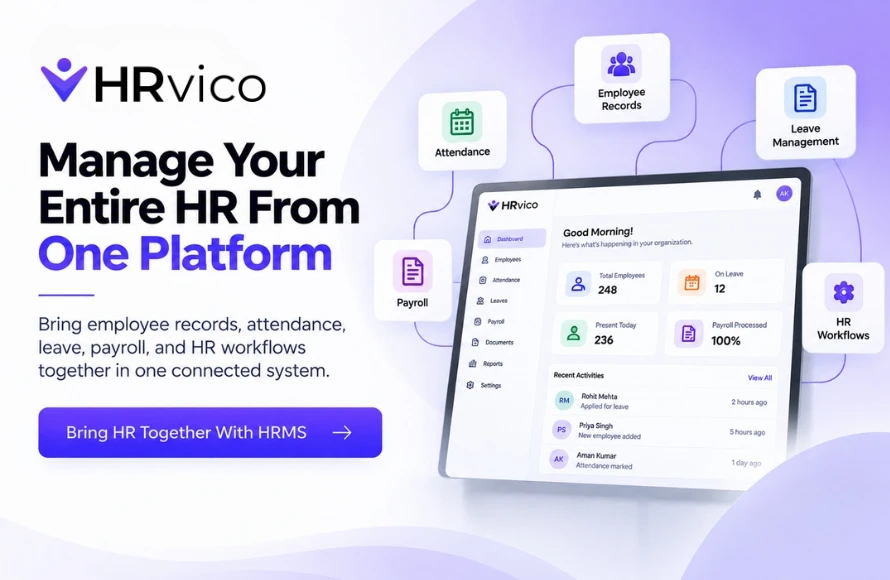
Managing HR becomes more challenging as a business grows. Employee information may be stored in Excel sheets, attendance may be tracked separately, leave requests may come through emails or messages, and payroll data may require another process altogether.
When HR processes are spread across different tools, HR teams often spend more time collecting information, checking records and coordinating between systems.
This is where HRMS software can help.
An HRMS, or Human Resource Management System, brings different HR processes together in one centralized platform. Instead of managing every process separately, HR can use a connected system to organize employee information and streamline everyday HR work.
What Is HRMS Software?
HRMS software is a technology solution designed to help businesses manage different HR activities through a centralized system.
Depending on the software, an HRMS may support areas such as:
✓ Employee records
✓ Attendance management
✓ Leave management
✓ Payroll
✓ Employee documents
✓ Recruitment and onboarding
✓ Employee self-service
✓ HR reports
The exact features vary from one HRMS to another, so businesses should evaluate software based on their actual requirements.
Why Do Businesses Need HRMS Software?
When a business is small, HR may be able to manage processes using spreadsheets, emails and separate tools.
As the workforce grows, however, the amount of HR information increases.
HR may need to manage hundreds of employee records, attendance entries, leave requests, documents and payroll-related information.
A centralized HRMS can help reduce the need to maintain disconnected systems and make important HR information easier to manage.
1. Manage Employee Records From One Platform
Employee information is at the center of many HR processes.
HRMS software can provide a centralized location for employee profiles and related information.
HR teams may be able to manage:
✓ Employee details
✓ Department and designation
✓ Joining information
✓ Reporting manager
✓ Work location
✓ Employment records
Instead of searching through multiple spreadsheets, HR can access relevant information through one system.
2. Simplify Attendance Management
Attendance management can become time-consuming when handled manually.
HRMS software can help centralize attendance information and make it easier to monitor employee attendance, depending on the available features.
This can reduce manual data collection and make attendance records easier to review.
3. Make Leave Management More Organized
Leave management often involves employees, managers and HR.
Without a structured system, requests may come through emails, messages or physical forms.
An HRMS can provide a more organized workflow where employees submit requests and authorized managers review them.
This can reduce unnecessary communication and make leave records easier to maintain.
4. Connect HR Processes With Payroll
Payroll depends on accurate employee information and relevant attendance or leave data.
When information is maintained separately, HR may need to manually collect and verify data before payroll processing.
Depending on the HRMS, employee information, attendance, leave and payroll-related processes can be connected within the same system.
This can help reduce repetitive data entry and improve process coordination.
5. Organize Employee Documents
HR teams manage many employee-related documents throughout the employee lifecycle.
These may include joining documents, employment records and other relevant files.
An HRMS with document management capabilities can help HR organize documents alongside employee profiles, making them easier to locate when required.
6. Improve Employee Self-Service
HR teams receive many routine employee requests.
Employees may need to update certain information, submit leave requests or access relevant HR records.
Depending on the software, employee self-service features can allow employees to handle suitable tasks themselves.
This can reduce repetitive HR queries and give HR more time for strategic and people-focused work.
7. Make HR Reporting Easier
HR leaders and business founders often need visibility into workforce information.
A centralized HRMS can make it easier to access relevant data and generate reports, depending on the system's reporting capabilities.
HR may be able to review information related to:
✓ Employee numbers
✓ Attendance
✓ Leave
✓ Departments
✓ Locations
✓ Other workforce information
This can reduce the need to manually combine data from multiple spreadsheets.
8. Reduce Repetitive HR Work
One of the biggest benefits of bringing HR processes together is reducing unnecessary manual work.
Instead of repeatedly entering the same information into different systems, HR can maintain centralized employee data and use connected workflows where supported.
This can save time and reduce the chances of duplicate or inconsistent records.
9. Support Growing Businesses
HR processes that work for a small team may become difficult to manage as the workforce grows.
For businesses across Delhi NCR, Noida, Greater Noida, Gurugram and Ghaziabad, a centralized HR system can help create more structured processes as employee numbers increase.
An HRMS can provide a foundation that supports HR operations as the organization expands.
10. Give HR and Founders Better Visibility
Founders and HR leaders need a clear understanding of their workforce.
Instead of depending on information spread across different files and tools, a centralized HRMS can provide a more organized view of employee information and HR processes.
The exact visibility available depends on the software and user permissions.
When Should a Business Consider HRMS Software?
There is no single employee-count rule.
A business may want to consider HRMS software when:
✓ HR is maintaining multiple spreadsheets
✓ Employee information is difficult to find
✓ Attendance and leave require manual tracking
✓ Payroll involves repeated data entry
✓ Employee documents are scattered
✓ HR reports take too much time
✓ Employee queries are increasing
✓ The workforce is growing quickly
✓ Different HR tools are becoming difficult to coordinate
The right time depends on the organization's processes and requirements.
What Should Businesses Look for in HRMS Software?
Before choosing an HRMS, HR and founders should identify their biggest challenges.
Important areas to consider include:
✓ Employee management
✓ Attendance and leave
✓ Payroll capabilities
✓ Employee documents
✓ Employee self-service
✓ Reporting
✓ Access controls
✓ Ease of use
✓ Scalability
✓ Pricing
The goal should not be to choose software with the largest feature list. It should be to choose a system that genuinely simplifies HR work.
Manage HR From One Centralized Platform With HRVico
As businesses grow, managing HR through separate spreadsheets, emails and disconnected tools can become increasingly difficult.
An HRMS can help bring important HR processes together and create a more organized workflow for HR teams and employees.
Explore HRVico's HRMS features to see how different HR processes can be managed from one centralized platform.
Check HRVico's pricing plans to explore options based on your organization's requirements.
Contact the HRVico team to discuss your HR needs and find a suitable approach for your business.
Explore HRVico to learn more about centralized HR management.