Home / Blog / EPF & ESIC Compliance Guide

Streamlining EPF & ESIC Compliance: A Guide for Indian Startups

By HRVico Compliance Team
May 25, 2026
6 Min Read

The Compliance Burden on Indian Startups

For any young enterprise or startup in India, navigating compliance is one of the most critical operational challenges. Under Indian labor laws, two statutory systems form the backbone of social security for employees: the Employee Provident Fund (EPF) and the Employees' State Insurance Corporation (ESIC).

Failing to comply with EPF and ESIC rules can lead to heavy interest charges, damages, and legal complications under the Employees' Provident Funds and Miscellaneous Provisions Act, 1952, and the ESI Act, 1948. In this guide, we break down what every startup founder and HR manager needs to know to streamline compliance effortlessly.

Understanding EPF (Employee Provident Fund)

The EPF is a mandatory savings scheme overseen by the EPFO (Employees' Provident Fund Organisation). Here are the core rules:

  • Applicability: Mandatory for any organization with 20 or more employees. (Startups can also register voluntarily with fewer employees).
  • Wage Threshold: Employees earning up to INR 15,000 per month in basic salary + dearness allowance must participate. For those earning above this threshold, participation is optional.
  • Contributions: Both employee and employer contribute 12% of the basic wage. The employer's contribution is split: 8.33% goes to the Employee Pension Scheme (EPS) and 3.67% goes to the EPF.

Understanding ESIC (Employees' State Insurance)

ESIC provides medical care and cash benefits for sickness, maternity, and employment injury. Key rules include:

  • Applicability: Mandatory for non-seasonal factories and establishments with 10 or more employees (20 in some states).
  • Wage Threshold: Applies to employees whose gross monthly wages do not exceed INR 21,000.
  • Contributions: The employer contributes 3.25% of the gross wage, and the employee contributes 0.75%, making a total contribution of 4.0%.

Proactive compliance is much cheaper than retroactive penalties. Delayed filings lead to Section 7Q interest (12% per annum) and Section 14B penal damages ranging from 5% to 25% of the default amount.

— HRVico Compliance Team

Common Compliance Challenges for Startups

Startups often struggle with EPF & ESIC due to manual bookkeeping. Common slip-ups include:

  1. Delayed Registrations: Establishments must register within 15 days of hitting the employee count threshold.
  2. Calculation Mistakes: Deducting ESIC on basic wages instead of gross wages, or missing dearness allowance in PF calculations.
  3. Missing the Filing Deadlines: The monthly contribution and Electronic Challan-cum-Return (ECR) must be submitted by the 15th of the following month.

How HR Automation Solves Compliance Issues

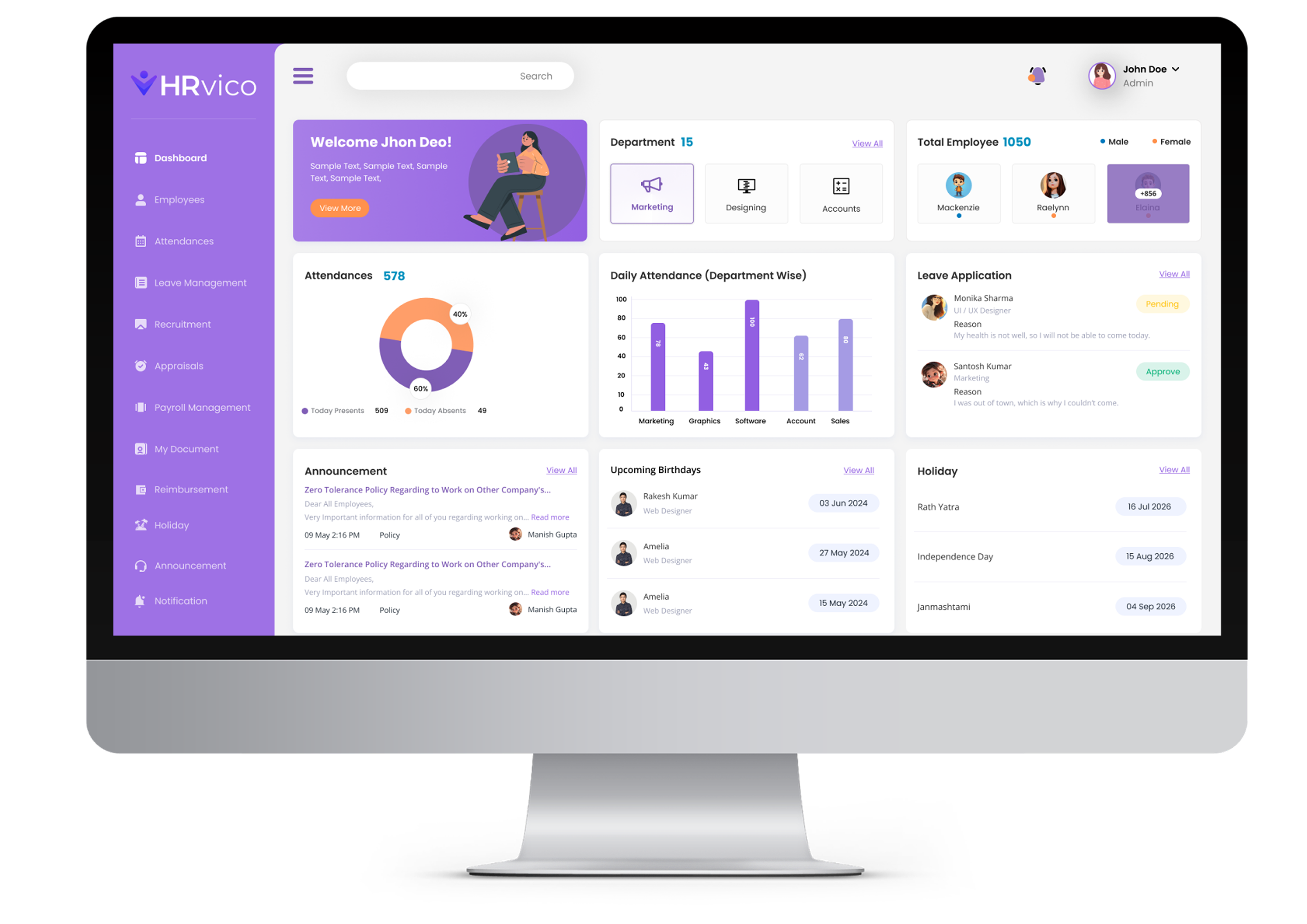
Modern HRMS solutions like HRVico automate compliance calculations directly from payroll:

  • Auto-deductions: The software checks employee gross and basic wages, determines eligibility, and calculates exact contribution amounts instantly.
  • ECR File Generation: Generates ready-to-upload text and CSV challan files for the EPFO and ESIC unified employer portals.
  • Digital Record Keeping: Maintains electronic Form 12A, Form 5, and Form 10 registers for audit readiness, eliminating physical paperwork.
Link copied to clipboard!

Book a Demo

See how HRVico can streamline your HR operations and automate payroll. Fill out the details below.